
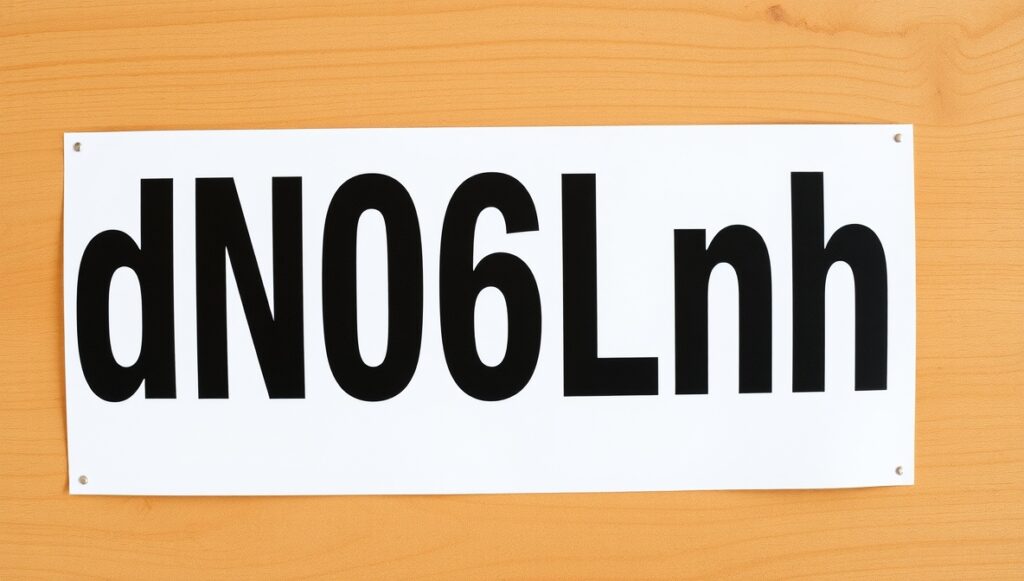
In today’s rapidly evolving digital world, new codes, identifiers, and unique terms appear regularly across different industries. Some are associated with software, while others are linked to databases, digital systems, product management, research, or specialized technologies. One such term that has attracted curiosity is dn06lnh. Although it may initially appear as a random combination of letters and numbers, identifiers like this often serve meaningful purposes within technical environments.
Understanding how these identifiers work helps individuals and organizations improve organization, efficiency, and security. Whether used in technology, inventory systems, research projects, or digital management, unique identifiers simplify processes and reduce confusion.
The Growing Importance of Unique Identifiers
Every digital ecosystem depends on organization. Whether millions of files are stored in cloud servers or thousands of products are tracked in warehouses, proper identification is essential. Without unique identifiers, managing large amounts of information would become difficult and prone to errors.
Organizations rely on identifiers to distinguish one object from another. Instead of depending solely on names that may be duplicated, unique codes provide accurate recognition. This reduces mistakes, improves automation, and enhances overall operational efficiency.
The growing reliance on artificial intelligence, cloud computing, and automation has further increased the demand for reliable identification systems. yy68kzj
Why Systems Depend on Structured Codes
Modern systems generate enormous amounts of information every second. Managing this data requires structured methods that allow software to quickly retrieve, classify, and process information.
A structured identifier can help systems:
- Prevent duplicate records
- Improve search speed
- Organize databases
- Support automation
- Enhance cybersecurity
- Simplify maintenance
- Improve reporting accuracy
Within these environments, dn06lnh may represent a unique identifier assigned for a particular operational purpose, allowing systems to maintain consistency across different platforms.
Characteristics of an Effective Identifier
Not every code is equally useful. High-quality identifiers generally possess several important characteristics that make them reliable over long periods.
Uniqueness
Every identifier should refer to only one item. Duplicate values create confusion and reduce data accuracy.
Consistency
Identifiers should remain stable throughout the lifecycle of the associated record.
Scalability
As organizations grow, identification systems must accommodate millions of additional records without creating conflicts.
Simplicity
Although identifiers may appear random, they often follow predefined structures that software can interpret efficiently.
Security
Many organizations design identifiers to reveal minimal sensitive information while still allowing accurate tracking.
These characteristics explain why codes similar to dn06lnh remain valuable across various industries.
Applications Across Different Industries
Unique identifiers are useful far beyond information technology. Numerous sectors depend on structured coding systems every day.
Information Technology
Software developers use identifiers to manage applications, servers, databases, configuration files, user accounts, and software versions.
Healthcare
Hospitals assign unique identifiers to patients, laboratory reports, medications, and medical devices to improve treatment accuracy.
Manufacturing
Factories use identification systems to monitor raw materials, production stages, quality inspections, and finished goods.
Education
Universities assign identifiers to students, courses, examinations, faculty records, and research projects.
Logistics
Shipping companies rely on tracking identifiers for packages, warehouses, transportation routes, and delivery verification.
Scientific Research
Researchers use unique codes to organize experiments, datasets, laboratory samples, and published findings.
Benefits of Using Standardized Identification Systems
Organizations gain numerous advantages when implementing reliable identification methods.
Improved Organization
Every item receives a distinct identity, making records easier to locate.
Faster Data Retrieval
Databases can search unique identifiers significantly faster than lengthy descriptive information.
Better Automation
Automated systems depend on unique values for processing transactions without human intervention.
Reduced Human Error
Employees are less likely to confuse records when each has its own identifier.
Easier Integration
Different software platforms communicate more effectively when standardized identification methods are used.
These advantages demonstrate why identifiers such as dn06lnh continue gaining relevance as digital transformation expands.
Challenges Organizations May Face
Despite their usefulness, identification systems also present certain challenges.
One common issue involves maintaining consistency across multiple databases. If identifiers are generated differently by separate systems, synchronization problems may occur.
Another challenge is documentation. Employees must understand how identifiers are created and used. Without proper documentation, future maintenance becomes more complicated.
Security is another consideration. While identifiers themselves may not contain sensitive information, poor implementation could expose valuable organizational data.
Long-term scalability also requires planning. Organizations should design systems capable of supporting future growth without requiring major structural changes.
Best Practices for Managing Digital Identifiers
Organizations can maximize efficiency by following several proven practices.
Develop standardized naming conventions before implementation.
Maintain centralized documentation describing identifier formats.
Avoid reusing retired identifiers whenever possible.
Perform regular database audits to detect inconsistencies.
Integrate automated validation to reduce manual entry mistakes.
Train employees on proper usage procedures.
Monitor system performance as databases expand.
These practices help ensure identifiers continue serving their intended purpose effectively.
The Relationship Between Automation and Identification

Automation depends heavily upon accurate identification. Whether processing online orders, managing cloud resources, or tracking inventory, automated software requires reliable references to every object involved.
Without unique identifiers, automation systems cannot distinguish between similar records. This increases processing time and raises the likelihood of errors.
As artificial intelligence becomes increasingly sophisticated, structured identifiers will remain foundational components supporting intelligent decision-making systems.
Organizations exploring advanced technologies should therefore prioritize robust identification frameworks capable of supporting future innovation.
FAQs
1. What is dn06lnh?
dn06lnh is an alphanumeric identifier that may be associated with different systems, records, or references depending on the context.
2. Why is dn06lnh being searched online?
Many people search for this term after seeing it on websites, documents, databases, or other digital platforms and want to understand its meaning.
3. Does dn06lnh have a specific meaning?
The meaning of dn06lnh depends on where it is used. It may represent a code, identifier, registration, or reference number.
4. How can I learn more about this code?
The best approach is to check the source where the code appeared and look for additional context that explains its purpose.
5. Is this code used worldwide?
Similar alphanumeric identifiers are commonly used around the world in various industries, databases, and tracking systems.
Conclusion
In conclusion, dn06lnh appears to be an alphanumeric identifier rather than a term with one universally accepted meaning. Depending on the context, it may refer to a UK-style vehicle registration, a digital identifier, a project code, or another unique reference used in technical systems.
As interest in dn06lnh continues to grow online, understanding its context is the key to interpreting its purpose correctly. Whether you encountered it on a website, in technical documentation, or as part of a registration code, researching the source will provide the most accurate explanation. Staying informed and verifying information through reliable references ensures you gain a clear understanding of dn06lnh and any similar identifiers you may come across.
Leave a Reply