- 0
- 1,290 word
Many people hear the term “honorary doctorate” and wonder whether it is the same as a traditional academic degree. Others are curious about who receives such recognition and whether they can apply for it. Understanding What Is an Honorary Doctorate and Who Can Apply? is important because honorary degrees have become a respected way for institutions to recognize exceptional achievements, leadership, and contributions to society.
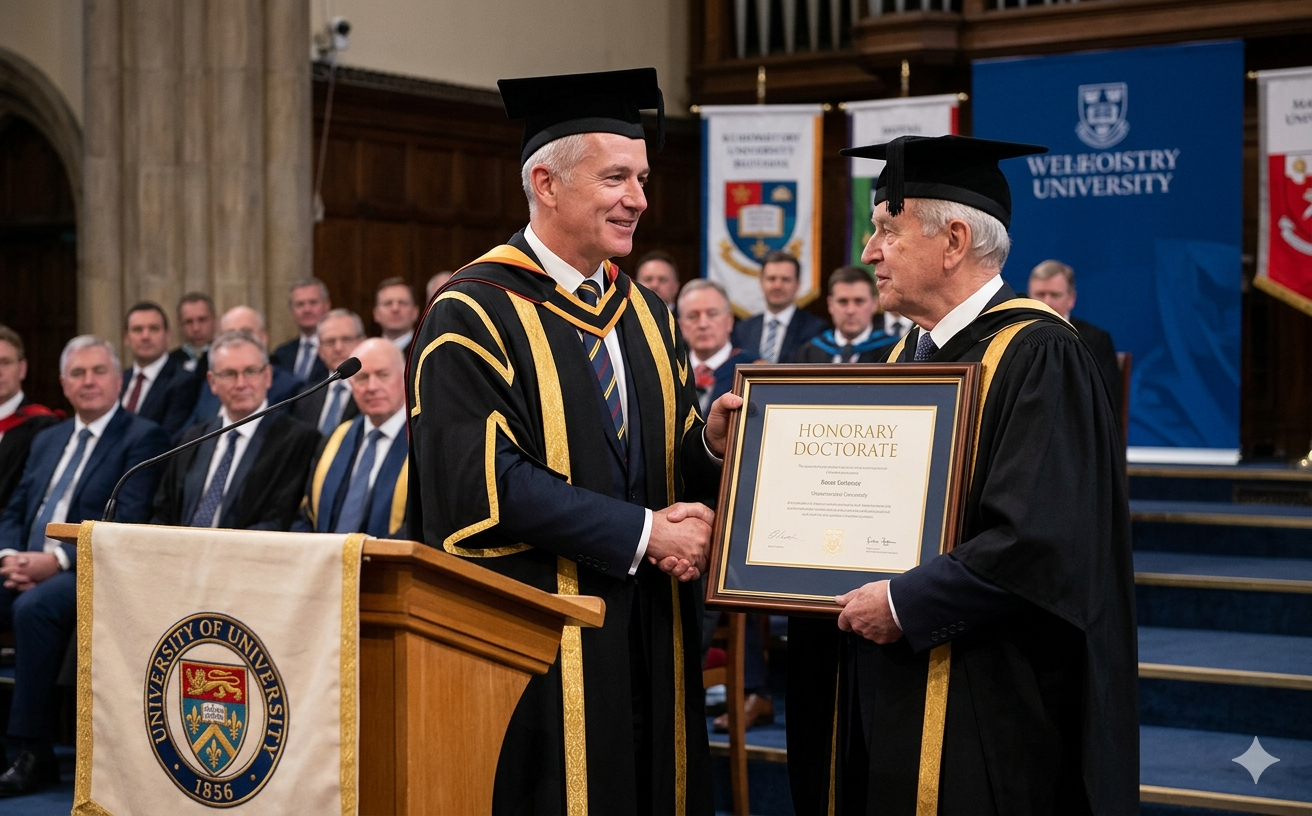
Unlike conventional doctoral programs that require years of study, research, examinations, and dissertation work, an honorary doctorate is awarded as a symbol of recognition. It celebrates individuals who have made a significant impact in their profession, community, or field of expertise. From business leaders and philanthropists to artists, scientists, and public figures, many distinguished individuals have received Honorary Doctorate throughout history.
This article explains the meaning of an doctorate, its purpose, eligibility requirements, benefits, limitations, and who may qualify for this prestigious honor.
What Is an Honorary Doctorate?
An honorary doctorate is a special academic distinction awarded by a university, college, or educational institution to recognize outstanding achievements or contributions. The recipient does not complete the standard academic requirements that are typically necessary for earning a doctoral degree.
The purpose of an doctorate is to honor individuals who have demonstrated excellence in their careers, leadership, humanitarian work, scientific innovation, artistic achievements, public service, or other areas that positively influence society.
These awards are often presented during graduation ceremonies where recipients may be invited to deliver speeches or inspire graduates with their experiences and accomplishments.
The History of Honorary Doctorates
Honorary doctorates have a long tradition dating back several centuries. Universities began awarding honorary degrees to distinguished individuals as a way to recognize exceptional service and contributions outside traditional academic pathways.
Over time, this practice expanded across the world. Today, universities use honorary doctorates to celebrate influential leaders, innovators, entrepreneurs, philanthropists, educators, and cultural icons who have made meaningful contributions to society.
Many famous individuals have received honorary doctorates, including world leaders, Nobel Prize winners, successful entrepreneurs, entertainers, and humanitarian activists.
Why Universities Award Honorary Doctorates
Universities grant honorary for several important reasons. These awards help institutions recognize excellence and celebrate individuals who embody the values they promote.
Some common reasons include:
- Exceptional professional achievements
- Contributions to education and research
- Humanitarian and charitable work
- Leadership in business and industry
- Contributions to arts and culture
- Scientific and technological innovation
- Public service and community development
- Advocacy for social change
By honoring such individuals, universities inspire students and encourage them to pursue meaningful careers and positive societal impact.
What Is an Honorary Doctorate and Who Can Apply?
One of the most frequently asked questions is: What Is an Honorary Doctorate and Who Can Apply?
Generally, honorary are awarded to individuals who have demonstrated remarkable accomplishments in their chosen field. Eligibility varies depending on the institution, but candidates often share certain characteristics.
Potential recipients may include:
- Business executives and entrepreneurs
- Community leaders
- Philanthropists
- Authors and researchers
- Educators and trainers
- Artists and performers
- Medical professionals
- Technology innovators
- Social activists
- Religious and humanitarian leaders
Some institutions allow nominations from the public, alumni, faculty members, or organizational representatives. Others may accept direct applications from individuals seeking recognition based on their achievements.
Eligibility Requirements
The requirements for receiving an honorary doctorate vary among institutions. However, most organizations consider several factors when evaluating candidates.
Common eligibility criteria include:
Professional Achievement
Candidates should demonstrate excellence and success within their profession or industry. This may include leadership roles, innovation, business growth, or recognized expertise.
Community Impact
Many institutions value individuals who have contributed positively to their communities through charitable work, mentoring, volunteerism, or social initiatives.
Ethical Conduct
Recipients are generally expected to maintain a strong reputation and demonstrate integrity, responsibility, and professionalism.
Long-Term Contributions
Honorary doctorates are often awarded to individuals whose contributions have created lasting benefits over many years.
Recognition and Influence
Candidates who have influenced others through leadership, education, innovation, or advocacy may receive special consideration.
How the Application Process Works
The process differs among institutions, but several common steps are involved.
First, the candidate may be nominated by another person, organization, or institutional committee. In some cases, self-nominations or direct applications are accepted.
Applicants are usually required to submit documentation such as:
- Professional biography
- Curriculum vitae or resume
- List of achievements
- Awards and recognitions
- Evidence of community contributions
- Letters of recommendation
- Supporting documents demonstrating impact
The institution then reviews the application and determines whether the candidate meets the established criteria.
A selection committee often evaluates candidates before making recommendations for approval.
Types of Honorary Doctorates
Honorary come in different forms depending on the individual’s area of achievement.
Some common honorary degree titles include:
Doctor of Humane Letters
Often awarded to individuals who have made outstanding contributions to society, culture, education, or public service.
Doctor of Laws
Typically granted to leaders in government, public affairs, law, or social justice.
Doctor of Science
Awarded to individuals who have contributed significantly to scientific research, innovation, or technological advancement.
Doctor of Business Administration
Commonly given to successful entrepreneurs, executives, and business leaders.
Doctor of Fine Arts
Recognizes achievements in visual arts, music, theater, literature, and creative fields.
Each institution determines which honorary degree best reflects the recipient’s accomplishments.
Benefits of Receiving an Honorary Doctorate
Receiving an honorary doctorate offers several personal and professional advantages.
Recognition of Achievement
The award serves as formal acknowledgment of a person’s contributions and accomplishments.
Enhanced Credibility
An honorary doctorate can strengthen professional reputation and public recognition.
Networking Opportunities
Recipients often connect with academic leaders, professionals, and influential individuals.
Increased Visibility
The recognition may generate media coverage and public awareness of the recipient’s work.
Inspiration to Others
Honorary doctorate recipients often serve as role models for students, professionals, and community members.
Limitations of an Honorary Doctorate
While honorary doctorates are prestigious, they differ significantly from earned academic degrees.
Recipients typically cannot claim they completed doctoral-level academic coursework or research requirements.
In many academic and professional settings, honorary degrees do not qualify individuals for positions that specifically require earned doctoral credentials.
Understanding this distinction helps maintain transparency and respect for both honorary and traditional academic achievements.
Common Misconceptions
Several misconceptions surround honorary doctorates.
One common misunderstanding is that honorary doctorate recipients automatically become academic experts. While recipients may possess significant expertise, the award itself is honorary rather than academically earned.
Another misconception is that anyone can easily obtain adoctorate. In reality, reputable institutions apply rigorous evaluation standards and consider only individuals with substantial accomplishments.
People also sometimes assume honorary doctorates provide the same academic standing as traditional PhD programs. However, the two serve different purposes and should not be viewed as equivalent qualifications.
How to Improve Your Chances of Being Considered
Individuals interested in honorary recognition should focus on creating meaningful and measurable impact.
Some ways to strengthen eligibility include:
- Building a successful professional career
- Contributing to community development
- Supporting charitable initiatives
- Demonstrating ethical leadership
- Publishing influential work
- Mentoring others
- Creating innovative solutions
- Earning industry recognition
Consistent contributions over time often attract attention from institutions seeking worthy candidates.
Conclusion
Understanding What Is an Honorary Doctorate and Who Can Apply? helps clarify the purpose and value of this respected distinction. An honorary doctorate is not an academic degree earned through coursework and research but rather a recognition of exceptional achievements, leadership, and service.
Universities and educational institutions award doctorates to individuals who have made significant contributions to society, their profession, or their communities. Business leaders, educators, philanthropists, innovators, artists, and social advocates are among those who may qualify.
While eligibility requirements vary, candidates are generally evaluated based on their accomplishments, influence, ethical conduct, and long-term impact. For those dedicated to making a meaningful difference in the world, a doctorate can serve as a powerful symbol of recognition and appreciation for their contributions.
Author

melink44@gmail.com
Related Posts

Breast Augmentation in Islamabad: Complete Guide & Tips
- 0
- 1,250 word
Breast augmentation is a cosmetic procedure designed to enhance breast size, shape, symmetry, or fullness. Women may consider it because of naturally...
Read out all
dn06lnh Explained: Everything You Need to Know
- 0
- 1,111 word
In today’s rapidly evolving digital world, new codes, identifiers, and unique terms appear regularly across different industries. Some are associated with software,...
Read out all
Ultimate Guide to yy68kzj: Hidden Power Revealed Secrets
- 0
- 1,562 word
The world is experiencing a remarkable transformation driven by technology, innovation, and the constant pursuit of improvement. Businesses, governments, educational institutions, and...
Read out all
Complete Guide to Hymen Repair Surgery in Dubai Insights
- 0
- 1,134 word
Hymen repair surgery is a delicate medical procedure that has gained attention for both personal and cultural reasons in different parts of...
Read out all
RunLHLP Revealed: The Secret You Need to Know
- 0
- 1,421 word
The modern world is driven by technology, innovation, and the constant pursuit of improvement. Businesses, professionals, students, and entrepreneurs are continuously searching...
Read out all
Common Dyson Vacuum Problems and How Professional Repair Services Fix Them
- 0
- 419 words
Introduction Dyson vacuum cleaners are known for their advanced technology, powerful suction, and durable design. However, even premium appliances can experience wear...
Read out all